
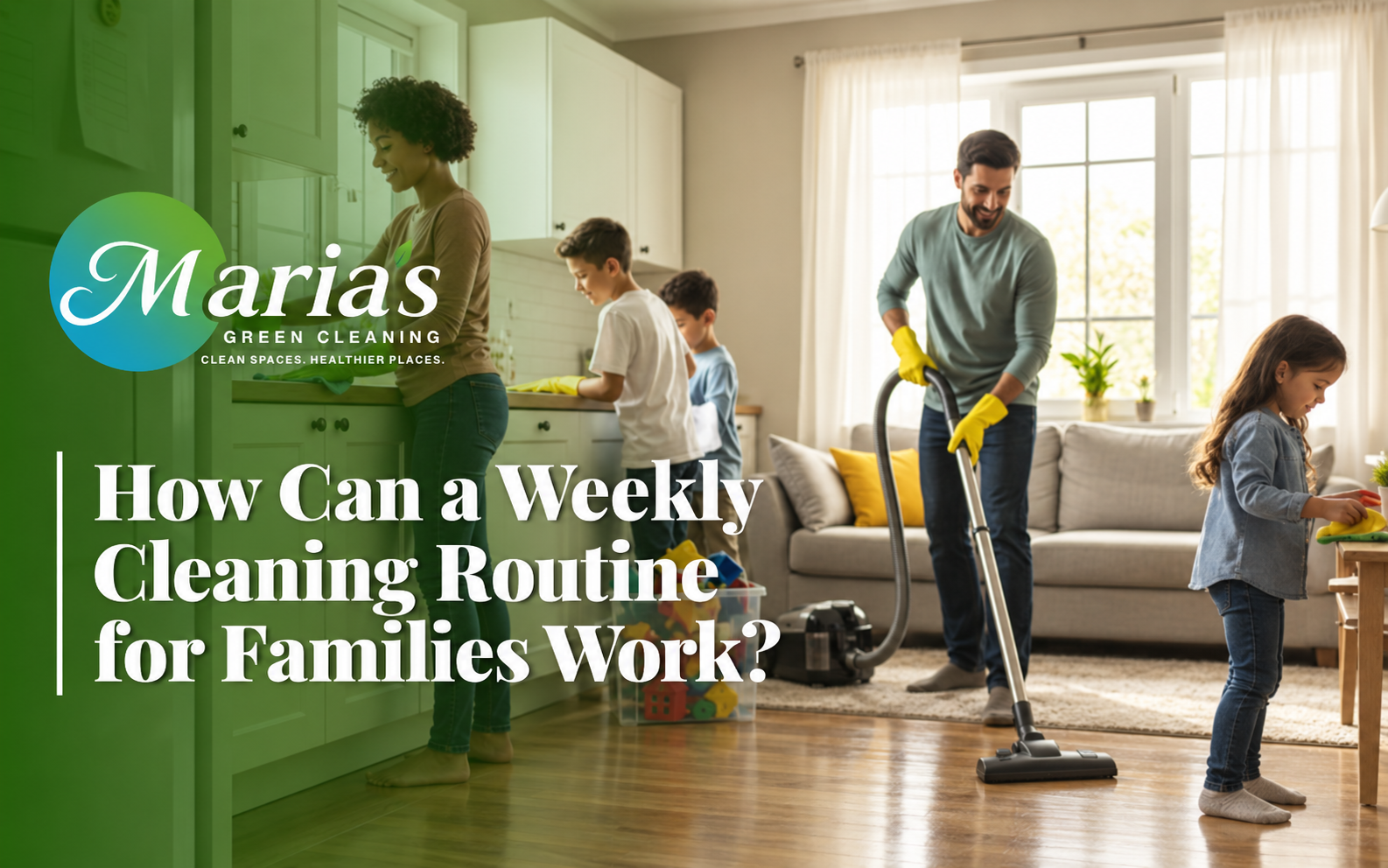
How Can a Weekly Cleaning Routine for Families Work?
Busy homes need simple systems, not more pressure. At Maria’s Green Cleaning, we help families make cleaning easier with clear goals, shared chores, safer habits, and flexible support when life gets full.
A weekly cleaning routine for families works best when chores are small, shared, and repeated. Families can keep the home tidy by using daily habits, a clear schedule, age-safe tasks, and occasional professional help when deeper cleaning is needed.
Set a Weekly Cleaning Routine for Families That Lasts
A lasting cleaning routine starts with realistic goals, because families need progress they can repeat. Focus first on high-use areas, then spread tasks across the week. This keeps cleaning from becoming one rushed weekend project.
Start with the rooms your family uses most. Therefore, give the kitchen, bathrooms, entryway, and living room the most attention.
Maria’s Green Cleaning recommends keeping each task small. For example, wipe counters after dinner, vacuum one main area, or clear one surface each day.
- Daily: dishes, counters, shoes, mail, and quick clutter.
- Midweek: bathrooms, floors, mirrors, and laundry catch-up.
- Weekend: bedding, deeper vacuuming, trash, and room resets.
A simple weekly plan helps families clean more often with less stress. Also, it helps children see cleaning as a shared home habit.
Build a Family Cleaning Schedule Template With Ease
A family cleaning schedule template works when every person knows the task, day, and expected result. The best template is easy to see, easy to change, and matched to school, work, meals, and family energy levels.
Use a fridge chart, whiteboard, or shared calendar. Then, add names, rooms, and short task notes.
Maria’s Green Cleaning uses clear task planning because vague chores often get skipped. For instance, “clean kitchen” feels large, while “wipe counters and sweep floor” feels simple.
- Monday: reset laundry and clear bedroom floors.
- Tuesday: wipe bathroom sinks and mirrors.
- Wednesday: mop kitchen and dining floors.
- Thursday: dust living room and clean touch points.
- Friday: empty trash and reset entryway.
- Saturday: change sheets and vacuum bedrooms.
- Sunday: plan chores and prepare supplies.
A family cleaning schedule template should change when family life changes. Therefore, review it often and move tasks before stress builds.
Assign Age-Safe Chores That Encourage Family Teamwork
Age-safe chores help children take part without feeling lost or unsafe. Younger kids need simple tasks, while teens can handle longer jobs. Clear steps, gentle praise, and fair rotation make family cleaning feel more balanced.
Small children can put toys away, match socks, or wipe small spills. Meanwhile, older children can fold laundry, vacuum rugs, or clean bathroom sinks.
Give each task a short demonstration first. Then, explain where supplies go and what the finished result should look like.
- Preschool children: toys, books, napkins, and small trash.
- School-age children: beds, shoes, pet bowls, and table wiping.
- Teens: laundry, floors, sinks, trash, and room resets.
Age-safe chores build responsibility at home. In addition, they help parents avoid carrying the whole cleaning load alone.
Practice Daily Cleaning Habits Home Life Can Support
Daily cleaning habits home routines can stay simple when each habit takes only a few minutes. Small actions after meals, before bedtime, and when entering the home prevent clutter from turning into a bigger weekly problem.
Start with habits that fit normal family moments. For example, rinse dishes after meals and place shoes in one basket near the door.
Also, use a five-minute evening reset. During this time, each person returns items to their place before bedtime.
Daily cleaning habits home systems work because they reduce buildup. As a result, the weekly cleaning routine for families becomes faster and easier.
The CDC says regular home surface cleaning helps remove germs, dirt, and impurities. Therefore, high-touch areas deserve steady attention.
Organized supplies make cleaning easier because family members can start without searching. A portable caddy, labeled shelf, and simple product list help everyone find cloths, sprays, gloves, bags, and tools quickly.
Keep microfiber cloths, sponges, all-purpose cleaner, bathroom cleaner, and gloves in one caddy. Then, place refills in a labeled cabinet.
Maria’s Green Cleaning encourages simple supply zones because they save time. Also, they make shared chores easier for kids and adults.
Keep cleaning products away from children and pets. In addition, avoid mixing products unless the label clearly says it is safe.
The EPA says children should not apply disinfectants, including disinfectant wipes. Therefore, adults should handle stronger products and store them safely.
Speed Cleaning Tasks With Simple Room-Based Methods
Room-based cleaning saves time because each person focuses on one clear area. Families can clean faster by using the right tools, starting with visible messes, and finishing one room before moving to another.
Begin with the kitchen, because food, dishes, and counters affect daily comfort. Then, move to bathrooms and shared spaces.
Use a top-to-bottom order. First, dust shelves and surfaces. Next, wipe counters. Finally, clean floors.
- Kitchen: dishes, counters, sink, stove, floor, and trash.
- Bathroom: mirror, sink, toilet, tub, floor, and towels.
- Living room: clutter, cushions, dust, remotes, and floors.
- Bedrooms: beds, clothes, trash, surfaces, and vacuuming.
Room-based cleaning helps families see progress quickly. Consequently, children and adults stay more motivated.
Fair chore sharing works when families discuss tasks before the week begins. A short planning talk helps parents rotate jobs, match tasks to time, and prevent one person from feeling responsible for every mess.
Hold a ten-minute family meeting each week. Then, ask what worked, what felt hard, and what needs to move.
Use clear rules for shared spaces. For example, everyone can return personal items before dinner or before bedtime.
Also, allow older kids to guide younger siblings through simple chores. This builds teamwork and helps chores finish faster.
If life feels too full, a house cleaning service in Harrison NY can handle deeper cleaning while the family keeps up with lighter tasks. Maria’s Green Cleaning can support families who need a cleaner home without adding more pressure.
Adjust Cleaning Plans When Family Schedules Change
A cleaning plan should change when school, work, sports, illness, or guests change the week. Flexible routines last longer because families can move tasks, reduce pressure, and keep the home managed during busy seasons.
Look at the schedule every month. Then, remove tasks that are not working and add tasks that solve current problems.
If weeknights are packed, move larger chores to Saturday morning. However, keep small daily habits in place.
A family cleaning schedule template should support real life. Therefore, it should never feel like a punishment for being busy.
When a routine stays flexible, families are more likely to keep it. Also, cleaning becomes a steady habit instead of a weekly fight.
Choose Extra Support for Deeper Home Cleaning Needs
Extra cleaning support helps when family time, health needs, or home size make deeper chores difficult. Professional help can reset kitchens, bathrooms, floors, and detailed areas while the family maintains simple daily habits.
Some homes need extra help after parties, holidays, illness, or busy school periods. In these moments, support can protect family time.
Use a house cleaning service in Harrison NY when deep cleaning takes too much weekend time. Also, use help when dust, grime, or clutter keeps returning.
- Choose DIY cleaning for light daily messes.
- Choose professional help for deep bathrooms and kitchens.
- Choose recurring help when schedules stay full.
- Choose a reset clean before guests or seasonal changes.
For local support, visit our Harrison home cleaning support page.
Frequently Asked Questions
How do I know where to start cleaning each week?
Start with the rooms your family uses most, such as the kitchen, bathrooms, and living room. Then, use this simple planning guide for busy homes to divide tasks into smaller days.
When should I update my family cleaning schedule?
Update your schedule when school, work, sports, guests, or family energy changes. A useful room-by-room checklist can help you see which tasks need weekly, monthly, or seasonal attention.
What happens if my family skips cleaning for a week?
Do not try to catch up in one stressful day. Instead, reset key areas first. You can also review our family-safe cleaning tips for simple ways to restart.
Why is daily cleaning better than one long cleaning day?
Daily cleaning keeps messes smaller, so the weekly plan feels easier. Small habits like wiping counters, sorting mail, and clearing shoes reduce clutter before it spreads through the home.
How do I get help when cleaning feels overwhelming?
Ask for help when deep cleaning takes too much family time or energy. You can request friendly cleaning help to discuss your home, schedule, and cleaning needs.
Keep Your Home Cleaner With Less Weekly Stress
A weekly cleaning routine for families becomes easier when the plan is clear, fair, and flexible. To make home care simpler, contact Maria’s Green Cleaning through our contact our local cleaning team page.