
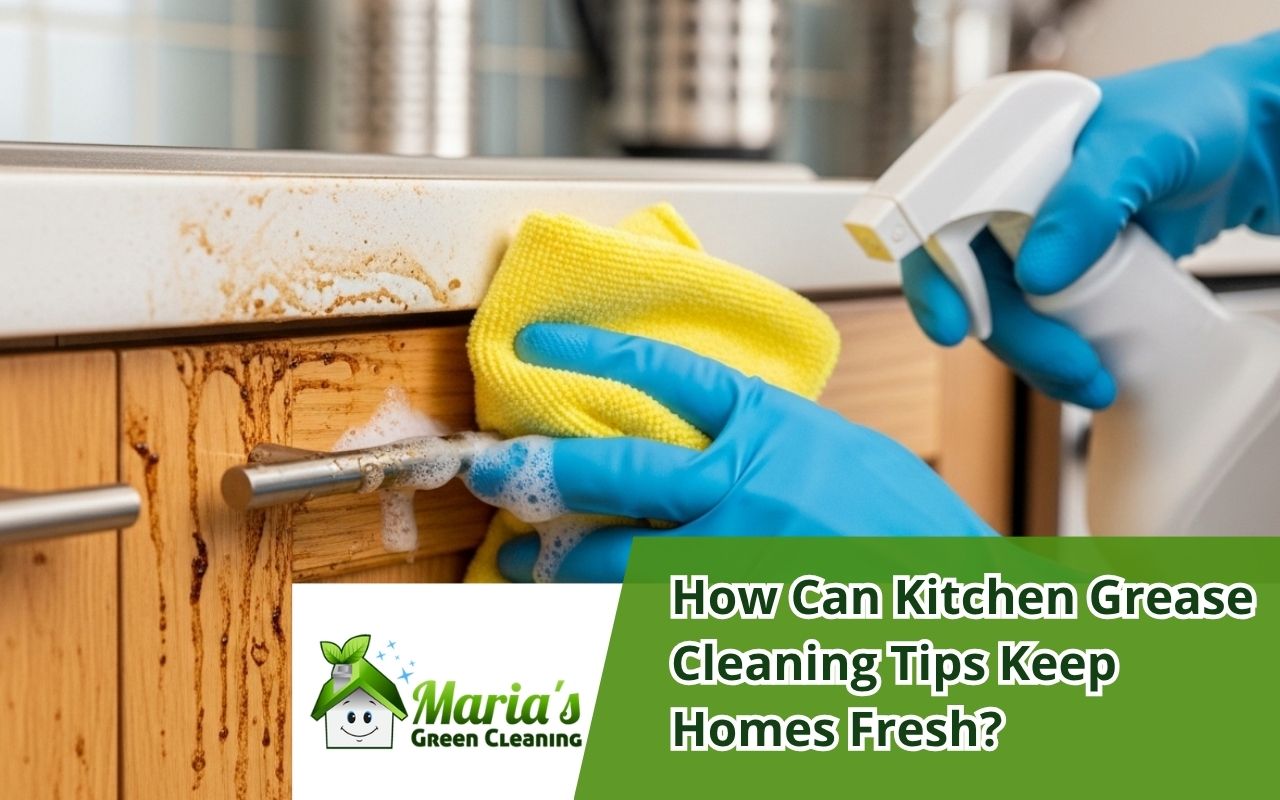
How Can Kitchen Grease Cleaning Tips Keep Homes Fresh?
Grease can settle fast after frying, baking, or daily meal prep. At Maria’s Green Cleaning, we help homeowners understand simple ways to cut sticky buildup before it spreads across cabinets, counters, vents, and appliances.
Kitchen grease cleaning tips are simple cleaning steps that remove oily residue from cooking surfaces. Homeowners, renters, and busy families need them when cabinets, counters, appliances, and vents feel sticky. These tips solve grease buildup before it traps dust, smells, and stains.
Kitchen Grease Cleaning Tips Guide Safer Daily Care
Kitchen grease cleaning tips work best when cleaning starts before oil hardens. Therefore, daily care should focus on warm water, mild soap, soft cloths, and quick wipe-downs near the stove, handles, backsplash, and nearby counters.
Grease starts as tiny oil droplets from cooking heat. Then, dust and food particles stick to the oily film. Over time, the surface becomes harder to clean.
Maria’s Green Cleaning uses these kitchen grease cleaning tips to help homes feel cleaner without harsh smells. Also, a simple routine makes weekend cleaning easier.
- Wipe the stovetop after cooking, once the surface is cool.
- Clean cabinet handles because fingers move grease there first.
- Use a damp microfiber cloth on nearby counters and switches.
- Check the range hood area because warm oil rises while cooking.
For more routine ideas, read our daily care guide.
Simple Daily Habits Reduce Grease Before It Hardens
Small daily habits reduce grease because fresh oil is easier to lift than old buildup. As a result, a few short cleaning steps after cooking can prevent sticky cabinets, dull counters, lingering smells, and harder deep-cleaning sessions.
First, cover pans when possible. Next, use the exhaust fan while frying. Then, wipe splatter zones before the oil cools completely.
Grease is easier to remove when it is fresh, warm, and not mixed with dust. This makes daily cleaning faster and safer for most surfaces.
- Use a lid or splatter screen during frying.
- Turn on ventilation before oil starts to smoke.
- Move small appliances away from heavy splatter zones.
- Keep a mild soap spray ready for quick cleanups.
Additionally, the NFPA notes that cooking equipment is a major source of home fires. Therefore, keeping oily areas clean supports both comfort and safety.
Safe Supplies Protect Cabinets While Lifting Sticky Grease
Safe supplies protect cabinets because grease removal needs pressure control, not harsh scrubbing. Therefore, soft cloths, mild soap, gentle brushes, and careful rinsing can clean painted, wood, laminate, and sealed surfaces with lower damage risk.
At Maria’s Green Cleaning, we recommend testing any cleaner on a small hidden spot first. This step helps protect finishes before full cleaning begins.
Abrasive pads can scratch paint and dull cabinet surfaces. Instead, choose tools that lift oil without cutting into the finish.
- Use: microfiber cloths, soft sponges, toothbrushes, and plastic scrapers.
- Avoid: steel wool, rough pads, and strong bleach on delicate finishes.
- Choose: mild soap, warm water, and surface-safe eco products.
- Check: cabinet seams, knobs, edges, and door corners.
The EPA Safer Choice program helps people identify products made with safer chemical ingredients. So, product labels matter when choosing home cleaners.
For safer supply ideas, visit our plant-based product advice.
Natural Degreaser Methods Remove Oil Without Harsh Odors
Natural degreaser methods remove light grease with common household ingredients. However, surfaces still matter. Vinegar, baking soda, lemon, and mild soap can help, but stone, wood, and painted finishes need gentle testing first.
Natural kitchen degreaser methods work well for many daily messes. Still, strong acids can harm some countertop sealers. Therefore, avoid vinegar on natural stone unless the surface maker allows it.
For many cabinet doors, warm water and dish soap should be the first step. Then, use baking soda paste only on stubborn spots.
- Mix warm water with a few drops of mild dish soap.
- Apply the mix with a soft cloth, not a rough pad.
- Let the cleaner sit briefly on sticky areas.
- Wipe gently, then rinse with a clean damp cloth.
- Dry fully to prevent streaks and swelling near seams.
A baking soda paste can loosen stubborn grease when used gently and rinsed well. This method helps on durable surfaces, but it should not replace surface-specific care.
Cabinet Steps Restore Shine Around Handles And Edges
Cabinet steps restore shine when cleaning follows a clear order. Therefore, grease removal kitchen cabinets should start with dust removal, continue with mild cleaning, focus on handles and edges, and end with rinsing and full drying.
Grease removal kitchen cabinets often takes more care near handles. Fingers leave oil there every day. Also, cabinet edges collect steam and splatter from cooking.
Maria’s Green Cleaning checks corners, molding, hinges, and cabinet pulls because grease hides in small lines. These areas often need a toothbrush or soft detail brush.
- Empty nearby shelves if drips may reach stored items.
- Dust the surface before adding any cleaner.
- Clean one door at a time for even results.
- Rinse cleaner residue with a damp cloth.
- Dry the cabinet face, edges, and hardware right away.
For a deeper room reset, follow our deep care checklist.
Hidden Appliance Areas Reveal Grease That Affects Safety
Hidden appliance areas reveal grease because oil mist moves behind, under, and above cooking zones. Consequently, range hoods, stove backs, drip pans, microwave doors, oven edges, and fridge gaps need planned cleaning, not only visible wiping.
Grease near heat can create stronger odors and harder residue. Also, dusty vents can reduce airflow. Better airflow helps move steam and cooking smells out of the room.
Before cleaning appliances, turn them off and unplug them when safe. Then, remove loose parts and soak them in warm soapy water.
Range hood filters, drip pans, and oven handles collect grease quickly. Cleaning these areas on a schedule helps reduce sticky buildup and cooking odors.
For hard-to-reach spots, use a long duster, vacuum attachment, or soft brush. However, avoid forcing appliances if moving them could damage floors or cords.
Professional Support Saves Time During Heavy Kitchen Buildup
Professional support saves time when grease is thick, old, or spread across many surfaces. Therefore, a trained team can help reset cabinets, counters, appliances, vents, and high-touch areas while using safer methods for each finish.
DIY cleaning works well for light grease. However, heavy buildup can require more time, stronger technique, and careful surface decisions.
Maria’s Green Cleaning helps homeowners who need a kitchen cleaning service in New Rochelle NY. We inspect sticky zones, explain the plan, and guide customers through practical maintenance steps.
Choose DIY care when grease is fresh and easy to wipe. However, choose professional support when cabinets feel tacky after cleaning, odors remain, or hidden appliance areas need attention.
For local home support, explore our local home support.
Frequently Asked Questions
How do I know grease is building up in my kitchen?
You may notice sticky cabinet handles, dull counters, yellow film, or odors near the stove. For more cleaning signs, use our daily care guide.
When should I deep clean greasy kitchen cabinets?
Deep clean cabinets when they stay sticky after a normal wipe. Monthly care helps many homes, while heavy cooking may need more frequent attention. Our deep care checklist can help.
What happens if I use the wrong degreaser?
The wrong cleaner can dull paint, damage wood, or leave streaks. Always test first, rinse well, and choose safer products. Review our plant-based product advice.
Why is grease removal kitchen cabinets harder near handles?
Handles collect cooking oil, hand oils, dust, and food residue. These layers become sticky over time, so gentle detail cleaning works better than fast wiping.
How do I book help for a greasy kitchen?
You can request a visit through our request a visit page. Share your kitchen concerns, surface types, and preferred timing.
Cleaner Kitchen Routines Create Easier Cooking Days Ahead
Cleaner kitchen routines create easier cooking days because grease stays manageable with steady care. When buildup feels too heavy, Maria’s Green Cleaning is ready to help you reset your space through our request a visit page.